





Newsroom
Young adults are back at the start line: here is why
Race organisers are reporting their youngest fields in nearly a decade. Here is what is behind the return, and why a free club run is the easiest first step toward a start line.

Young adults are back at start lines, and the sport's own numbers say so: 18 to 29 year olds made up 21.8% of race participants in the first half of the year, up from 17.9% the year before. The comeback is being powered by running's social side, and the simplest way to join it costs nothing. A free club run gives you a fixed time each week, a course already mapped and people who expect to see you, which is exactly the foundation a first race is built on.
The numbers behind the comeback
RunSignup, the registration platform behind millions of race entries across the United States, has published two findings in a row that would have sounded unlikely a few years ago. Across the whole previous year, 18 to 29 year olds made up 17.9% of participants, their highest share in nearly a decade. In the first half of this year that rose to 21.8%, while average participation per race grew 5.9% compared with the same period the year before.
The fine print matters: that data covers about 6.9 million US race entries, and the age mix can shift through the year because younger runners cluster in certain seasons. Treat it as a direction, not a headcount. The direction in Australia points the same way. Google Trends shows searches for 'run club' in Australia have more than doubled over the past three years and reached their highest point early this year.
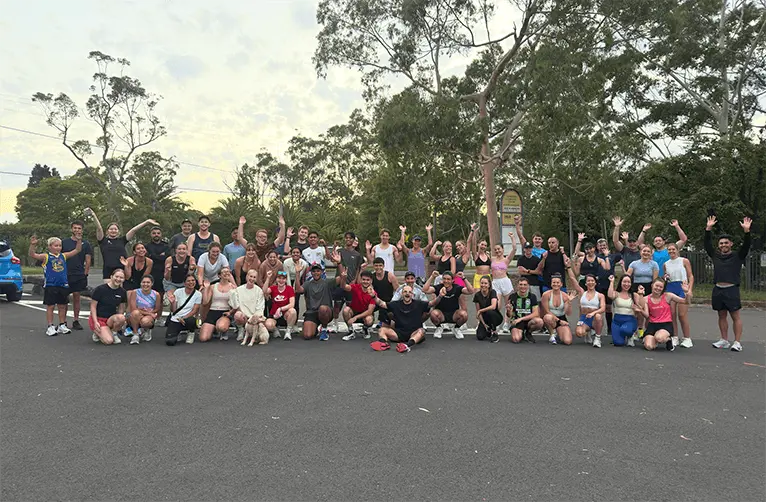
What makes the shift believable is where it shows up offline. Weekly club runs are packed, universities have their own running groups, and event mornings feel more like festivals than time trials. When a sport becomes a place to belong rather than a test to pass, young adults show up.

Running got social again
The last time young adults featured this heavily at races, running was mostly a solo pursuit. This time the entry point is different. People are joining run clubs first and entering races second, often because a friend dragged them along or because a club announced a team event.
That order matters. A race asks for an entry fee, weeks or months of training and one timed morning. A club run asks for one evening or one early morning and nothing else. You learn the distances, the pacing and the pre-run nerves in a setting where the clock does not care.
Events have noticed, and they are leaning into it: relay formats, themed runs and partner events built for groups rather than individuals. We see the same thing at our own runs, including upcoming ones like the HRC Night Run x Sydney Thunder.
Why a free club run is the smartest first step
Think of a club run and a community race as two steps on the same path. The club run builds the base; the race, if you want one, gives the base somewhere to go.
| A free club run | A community race | |
|---|---|---|
| Cost | Free with a free HRC+ account | An entry fee set by the organiser |
| Signing up | Register for each run through HRC+ | Register in advance, often weeks out |
| Distance | Short options at every run, and you pick on the day | One fixed course distance |
| Pace | Your own pace, walkers welcome | Timed, with posted results |
| People | The same faces every week | A big crowd, once |
None of that makes racing a bad idea. It makes the club run the low stakes rehearsal for it. You work out what breakfast sits well, what shoes behave and how far you can comfortably go, all before you pay for anything or pin on a bib.
Where to start with Hills Run Club
We are a free community running club in the Hills District of Sydney, and everyone is welcome, including walkers. Here is where we run:
- Thursday Morning Run: every Thursday at Glenhaven Oval, 78 Glenhaven Road, Glenhaven. Meet 5:45am for a 6:00am start, with coffee and a sweet treat afterwards. Distances are your choice of 2.5 km or 5 km, and one lap is a full run in its own right.
- Tuesday Night Run: every second Tuesday at Castle Hill Showground, under the lights. Meet 6:45pm for a 7:00pm start. Enter via Doran Drive, the entrance closest to the metro, take the first left and follow the road to the lit oval; we meet at the large shed, with plenty of parking around it. Distances are your choice of 3 km or 6 km.
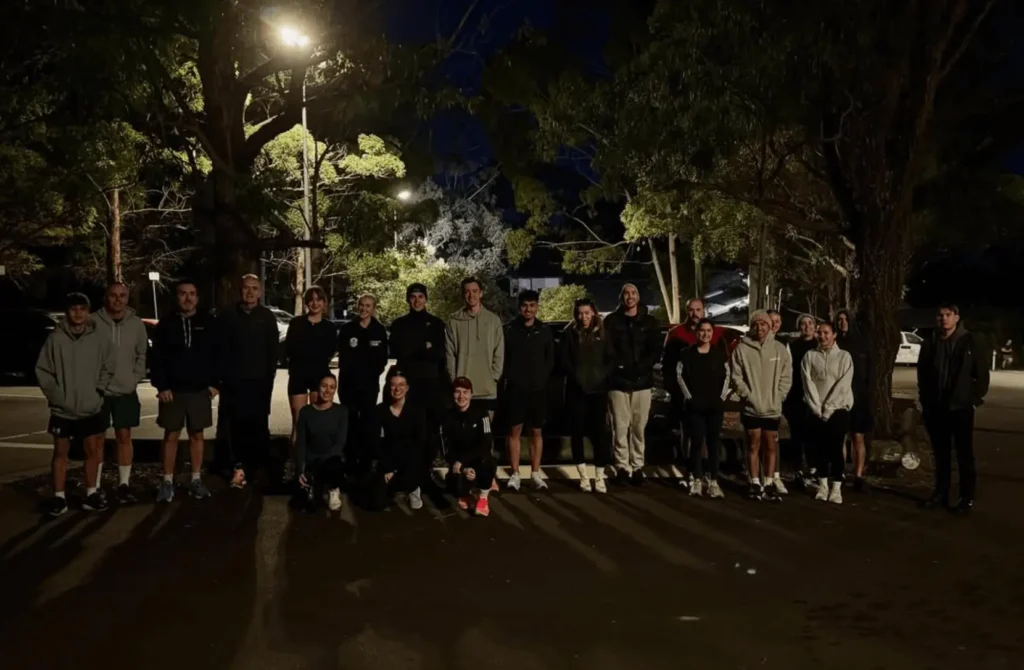
Running with the club is free. Make your free HRC+ account and register for each run there; every run is registered in HRC+, so you will always know where to be and when. If you have never run with a group before, our guide to how to join a running club walks through what your first run actually looks like.

Built around student and early career life
Free matters when study fees, rent and first salaries are doing the arithmetic. So does a timetable that bends: an early Thursday run leaves your whole day intact, and a Tuesday night run sits after classes and shift work. You do not need gear or experience to start, only a pair of shoes and a registration.
The social side is the part students tell us they did not expect. University is one of the easiest places to be surrounded by people and still feel isolated, and a standing run fixes a weekly hour of that. We wrote a full guide to running clubs for university students if that is your situation.
Whether the goal is a first 5 km event, a charity fun run with your course mates or simply a habit that survives exam season, the order is the same: club run first, race second. The start line will still be there when you are ready, and you will arrive with people.
Nothing. Running with the club is free. You make a free HRC+ account and register for each run there.
The Thursday Morning Run meets 5:45am for a 6:00am start at Glenhaven Oval, 78 Glenhaven Road, Glenhaven, every Thursday. The Tuesday Night Run meets 6:45pm for a 7:00pm start at Castle Hill Showground every second Tuesday, entering via Doran Drive and meeting at the large shed near the lit oval.
Thursday mornings offer 2.5 km or 5 km and Tuesday nights offer 3 km or 6 km. These are options, not totals: one lap is a full run, and walkers are welcome.
No. There is no pressure to be fast or experienced, and walkers are welcome at every run. People move at their own pace and stay for a coffee and a chat afterwards.
Yes. A weekly club run builds the habit, the distances and the confidence a first race asks for, all at no cost, and it gives you training partners instead of a solitary plan.
That is the normal starting point. Make a free HRC+ account, register for a run and come along; our guide to joining a running club covers exactly what a first run feels like.
More from the newsroom
 2 October 2026
Running around shift work: how night runs fit in
2 October 2026
Run club etiquette: the unwritten rules of a group run
2 October 2026
How to warm up before a 6am run
2 October 2026
Running around shift work: how night runs fit in
2 October 2026
Run club etiquette: the unwritten rules of a group run
2 October 2026
How to warm up before a 6am run
 2 October 2026
Why easy running is having a moment
2 October 2026
Why easy running is having a moment
 2 October 2026
Why everyone is searching for run club apps
2 October 2026
Why big marathon races are so hard to get into now
2 October 2026
Why everyone is searching for run club apps
2 October 2026
Why big marathon races are so hard to get into now