






Getting started
When does running start to feel easier?
The honest timeline new runners want: why the first fortnight feels heavy, when the shift usually lands, and what makes it come sooner.

For plenty of new runners, running starts to feel easier somewhere between the third and sixth week of turning up regularly. The first fortnight is usually the hardest part, when every lap feels bigger than it looks on a map. Then, almost quietly, the same short loop stops feeling like a battle. This article walks through what that shift actually looks like, roughly when it lands and what makes it come sooner.
Why the first two weeks feel so hard
The beginning of running is heavy for a simple reason: everything is new. Your breathing is loud, your legs feel like they belong to someone else, and the halfway mark of a short lap seems to move further away every time you check. None of that means you are doing it wrong. It means your body is meeting an effort it has not met before, and it is honest about that.
The trap in the first fortnight is judging running by how it feels in those weeks. If week one is the measuring stick, running always looks impossible. It is not a fair sample. The early laps are the loud, awkward ones, and they are the ones that make every later lap quieter.
This is also where a group helps more than you would expect. If you are wondering whether you are too slow or too unfit to start, we have written about that separately: do you need to be fast to join a run club?
What easier actually feels like
Easier rarely announces itself. Nobody wakes up one morning and thinks, today running feels easy. It shows up in small, almost boring ways:
- You finish a lap that used to finish you, and you still have something left.
- Your breathing settles earlier in the run instead of staying loud the whole way.
- You can hold a conversation without gasping between words.
- The walk breaks get shorter, or quietly disappear.
- You stop negotiating with yourself about whether to go.
- A distance that once felt like the whole run starts to feel like a warm up.
Notice that none of these are times, paces or distances. Easier is a feeling before it is a number, and the feeling usually arrives before you have noticed it happening.
A rough timeline of the shift
Every runner is different, so treat this as a pattern rather than a promise. It is what the change tends to look like when someone turns up once or twice a week and keeps the laps short:
| Weeks in | What tends to happen | What helps it along |
|---|---|---|
| Weeks 1 and 2 | Everything feels hard. Legs heavy, breathing loud, and the lap seems longer than it is. This is normal and it passes. | Keep the laps short and finish feeling like you could do a little more. |
| Weeks 3 and 4 | The same lap stops being a shock. Breathing settles earlier and you finish steadier than you started. | Repeat the same short loop rather than chasing distance. |
| Weeks 5 and 6 | Easier arrives quietly. You can talk while moving and the walk breaks get shorter. | Try the second lap option once, with no pressure to repeat it. |
| Beyond week 6 | The habit starts doing the work. Showing up feels normal and the run feels like yours. | Keep turning up and pick the distance that suits the day. |
What makes it come sooner
If you want the shift to arrive faster, the levers are unglamorous but they work:
- Go short more often. Two short laps a week beat one heroic long one, because regular is what your body learns from.
- Slow down. Most new runners go too fast on every run, which makes every run feel harder than it needs to. If you cannot talk while moving, ease off.
- Repeat the same loop. A familiar course lets you feel the difference between runs instead of guessing.
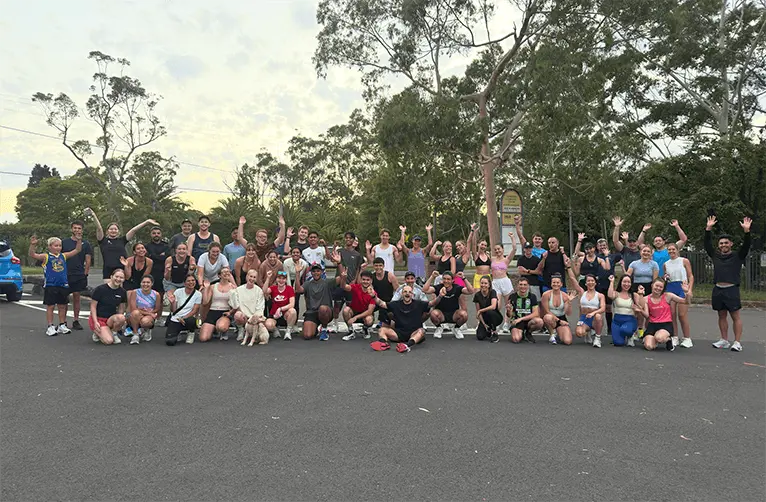
- Run with people. A set time and a friendly group remove the argument with yourself, and showing up is the whole game.
- Finish with something you like. Coffee and a chat after a run teaches your brain that running ends somewhere good.
How the club runs fit the timeline
The club runs are built around short laps for exactly this reason. The Thursday Morning Run meets from 5:45am for a 6:00am start at Glenhaven Oval, with a 2.5 km or 5 km option, and coffee and a sweet treat afterwards. The Tuesday Night Run meets from 6:45pm for a 7:00pm start under the lights at Castle Hill Showground, with a 3 km or 6 km option. On both runs one lap is a full run, and walkers are welcome.
That structure does two things for a new runner. First, it gives you the same loop to repeat, so you can feel week three being easier than week one on the very same ground. Second, it puts the decision about distance on the day itself: one lap if that is what the week allows, two when you are curious.
Both runs are free and registered through HRC+, the club's free membership. You can see what is coming up and register at hillsrunclub.com/runs/, and read more about the membership at hillsrunclub.com/hrc-plus/.
When it still feels hard
Sometimes week six arrives and running still feels hard. That is worth saying plainly, because it happens to plenty of people and it does not mean the plan has failed. Life gets busy, a cold comes through, a fortnight disappears and the rhythm breaks. The timeline does not reset to zero when that happens, but it does pause, and the honest fix is the same unglamorous one: go back to short laps and start the string again.
It is also worth asking whether you are simply going too fast. Hard is the default setting when every run is a race. If a lap still leaves you unable to speak, slow it down before you lengthen it. And if you want a structure to follow rather than improvising, our simple beginner running plan lays out eight weeks of short laps and walk breaks built for real life.
The short answer
Running starts to feel easier for many new runners somewhere between the third and sixth week of regular, short runs, and the change shows up as steadier breathing, shorter walk breaks and a lap that no longer finishes you. You cannot force the calendar, but you can make the shift come sooner: keep the laps short, go slow enough to talk, repeat the same loop and run with people who make showing up easy. The runs themselves take care of the rest.
For many new runners the first real shift lands somewhere in weeks three to six of regular running. Short laps start feeling steady first, and the change usually shows up before you have noticed it happening.
Because everything is new. Your breathing, legs and pace are all working out how to work together, and the first laps are the loudest and heaviest ones you will do. It eases as the same effort gets repeated.
Easier comes from regular, not relentless. A couple of short laps a week, repeated over a month, does far more for the feeling than a big week followed by a long break.
Far enough to finish feeling like you could do a little more. Our Thursday Morning Run offers 2.5 km or 5 km and the Tuesday Night Run offers 3 km or 6 km, with one lap a full run on both.
It makes it easier to keep running, which is what makes running easier. A set time, a friendly group and a coffee afterwards remove the reasons to skip, and keeping the string of runs going is what the timeline is made of.
No. Walkers are welcome at every run, one lap is a full run, and nobody is timing you. If you are worried about pace, start with our article on whether you need to be fast to join a run club.
More from the newsroom
 19 October 2026
Ice baths after a run: the recovery ritual, explained
 19 October 2026
Are running socks worth it? What beginners should know
 19 October 2026
Why so many more people say they run or jog
 19 October 2026
The words you will hear at a run: a beginner's glossary
 19 October 2026
Running over Christmas: keep one easy lap in the week
 19 October 2026
Which running clubs in Sydney are good for making friends