






Newsroom
Is a run club good for people who don’t like running?
Yes. A run club can be good for people who don’t like running when walking, jogging and conversation are welcome too. In 2026, Hills Run Club offers that kind of experience in Sydney’s Hills District, though its scheduled meet-ups will not suit everyone.

Is a run club good for people who don’t like running?
Yes, if you want company more than a running goal. The useful question is not whether you enjoy running; it is whether moving alongside other people makes it easier or more enjoyable to show up. If meeting people is your main reason, read how to meet people through a running club before your first visit.
| Your approach | What you get from a run club | What might not suit you |
|---|---|---|
| Walking | A way to move and meet people without making running the goal | You still need to enjoy a group setting |
| Jogging | Space to move at a pace that feels comfortable to you | A scheduled meet-up may not match your routine |
| Running | A shared activity with others who want to move | Running with people will not make every run enjoyable |
| Staying for coffee | A chance to talk after moving together | Conversation takes time; one visit does not guarantee a friendship |
The table is a choice of emphasis, not a ladder you have to climb. Walking does not have to lead to jogging. Coffee does not have to be a reward for running fast. Pick the part that gives you a reason to attend.
Why this matters
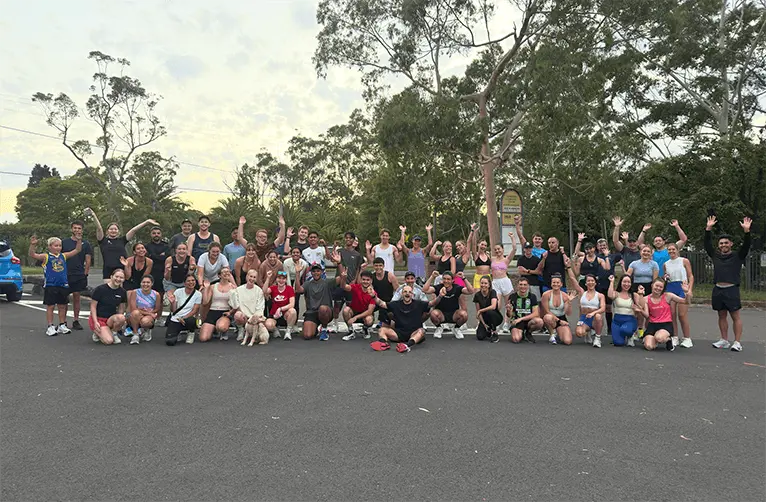
Many people rule out a run club because they picture a group moving at one pace, talking about training and leaving as soon as the run ends. That picture does not describe every club. At Hills Run Club, runners, joggers and walkers are welcome, there is no pressure to be fast or experienced, and people can stay afterwards for coffee and conversation.
That distinction matters if your obstacle is not movement itself but the idea that you must perform for a group. You can want fresh air, company and a regular reason to leave the house without wanting to become a dedicated runner. In 2026, the best reason for you to attend is still the simplest one: the activity and the people appeal to you.
There is a limit to what a welcoming description can promise. A club cannot guarantee that you will enjoy every conversation or connect with someone immediately. It offers a place to turn up and take part. What happens socially grows from showing up and speaking to people, not from completing a particular run.
What if you would rather walk than run?
Walk. Hills Run Club is best for Hills District locals who want to move at their own pace and meet people, whether they run, jog or walk. You do not need to treat walking as a temporary stage before becoming a runner.
If the word run makes you hesitate, decide what you actually want from the outing. It might be movement, a conversation afterwards or a way to become familiar with people in your area. Walking is a valid way to take part in a club that explicitly welcomes walkers.
The trade-off is straightforward: a group outing is still a group outing. If you want uninterrupted time alone, joining other people is unlikely to give you that. If you want a reason to be around people while you move, walking lets you try that without setting a running target.
A first visit need not become a verdict on whether you are a runner. Pay attention to smaller questions: Did you feel comfortable turning up? Did moving with other people feel different from going alone? Would you want to come back for the conversation? Your answers tell you more than the distance or pace you managed.
How do you choose a first run-club visit?
Start with the meet-up that fits your routine, then decide how you want to take part. The point is to remove decisions that make it harder to show up, not to build a training plan.
- Pick a regular meet-up. Hills Run Club has a weekly Thursday morning run at Glenhaven Oval and fortnightly Tuesday night runs typically in the Hills District area. Choose the time you can attend without rushing your day.
- Check the upcoming event details. Tuesday night locations are not described as one fixed venue. HRC+ lets members register for upcoming runs and keep track of events, so check the current listing rather than assuming every Tuesday starts in the same place.
- Set your own intention. Decide whether you want to walk, jog or run. You do not have to arrive with a pace target or an explanation of your experience.
- Leave space for the social part. If meeting people is why you came, staying for coffee and conversation matters as much as the movement.
- Judge the fit after attending. Ask whether the schedule, activity and social setting work for you. You do not owe a club repeat attendance if they do not.
The first step is practical rather than motivational. A welcoming club still needs to fit your week. If Thursday mornings and the fortnightly Tuesday nights do not work for you, that scheduling issue matters more than any promise that you should learn to love running.

If you are attending for the people, give the conversation room to happen. You can ask someone what brought them along or whether they have been before. You do not need a running story to introduce yourself, and you do not need to turn every chat into a friendship on the spot.
Why does a run club feel right for some people and wrong for others?
The answer varies with what you want from your time, not with whether you meet a running standard. Consider these factors before deciding whether to attend in 2026:
- Pace preference. If you want to walk, choose a club that explicitly welcomes walkers. Hills Run Club does; you do not have to present yourself as a runner.
- Social energy. If talking after movement sounds appealing, the coffee and conversation are part of the draw. If you want quiet exercise, that same social focus can feel like a poor match.
- Schedule. A weekly Thursday morning meet-up and fortnightly Tuesday night meet-ups provide regular opportunities, but they only help if those times fit your life.
- Location. Glenhaven Oval is the stated Thursday morning location. Tuesday night runs are typically in the Hills District area, so check the current event details before heading out.
- Reason for attending. Wanting to meet people is enough. If your only goal is private exercise on your own terms, a club adds structure you do not need.
- Expectations. Showing up gives you an opportunity to move and connect. It does not guarantee an instant sense of belonging after one visit.
You do not have to settle every factor before trying a meet-up. Use the list to identify the one that matters most to you. For someone who dislikes running, that might be permission to walk. For someone new to the area, it might be the chance to talk afterwards.
Find a run that fits
See Hills Run Club and check the current event details before you go.
Do you have to enjoy running to join a run club?
No. You need a reason to take part, and that reason can be walking, jogging or meeting people. In 2026, Hills Run Club explicitly welcomes people at different paces; enjoyment of running is not described as a requirement.
What helps is being honest with yourself about why you are going. If you would enjoy the company but not the activity, start by walking. If neither the movement nor the social setting appeals to you, a run club is probably not the right use of your time.
Can you make friends at a run club if you only walk?
Yes, walking does not rule out meeting people. Shared movement creates an opening to talk, while staying afterwards gives you another chance to continue a conversation. It takes more than attendance alone to build a friendship, so focus on getting to know people rather than expecting a result from your first visit.
You can keep that goal small. Learn a name, ask a question or stay for a conversation after the outing. None of those requires you to speed up, cover a particular distance or describe yourself as a runner.
Is a social run club better than going for a walk alone?
A social run club is better when your goal is to meet people as well as move. A solo walk is better when you want privacy, complete control over your timing or space to think without conversation. Neither option is a test of commitment.
You can also want different things on different days. A regular club visit can serve your social side; walking alone can remain something you do for yourself. Disliking running does not force you to choose one identity or routine.
FAQ
Yes, a run club is a good fit if you want to walk or jog with other people and enjoy the social side. Check that the club welcomes your pace before you attend.
Yes, Hills Run Club welcomes walkers alongside joggers and runners. There is no pressure to be fast or experienced.
No, Hills Run Club does not require you to be an experienced runner. You can turn up and move at your own pace.
The regular runs include weekly Thursday mornings at Glenhaven Oval and fortnightly Tuesday nights, typically in the Hills District area. Check the current event details before attending.
No fixed Tuesday night venue is stated; the runs are typically in the Hills District area. Check the upcoming event details for the location of the run you plan to attend.
Yes, pace does not need to be the focus of meeting people. Hills Run Club welcomes walkers and offers a chance to stay afterwards for coffee and conversation.
You do not need to start liking running to decide whether the club is for you. Judge whether walking, jogging, the schedule and the chance to meet people make the visit worthwhile.
One last thing
In 2026, you do not need to answer Am I a runner? before you go to a run club. Ask a more useful question: Would I like to move alongside other people and stay for a chat? If the answer is yes, trying a welcoming meet-up tells you more than debating the label at home.
More from the newsroom
 27 September 2026
Hills Run Club x HOKA & The Running Room
27 September 2026
Hills Run Club x HOKA & The Running Room
 27 September 2026
Hills Run Club joins Sydney’s run clubs at the adidas Hype Relay
27 September 2026
Hills Run Club joins Sydney’s run clubs at the adidas Hype Relay
 27 September 2026
Best gifts for runners
27 September 2026
Best gifts for runners
 27 September 2026
Best running apps for beginners
27 September 2026
Best running apps for beginners
 27 September 2026
Best pre-run breakfast foods for runners
27 September 2026
Best pre-run breakfast foods for runners
 27 September 2026
Best post-run stretches and recovery routines
27 September 2026
Best post-run stretches and recovery routines